Why your breaker keeps tripping (and when it is not the breaker)
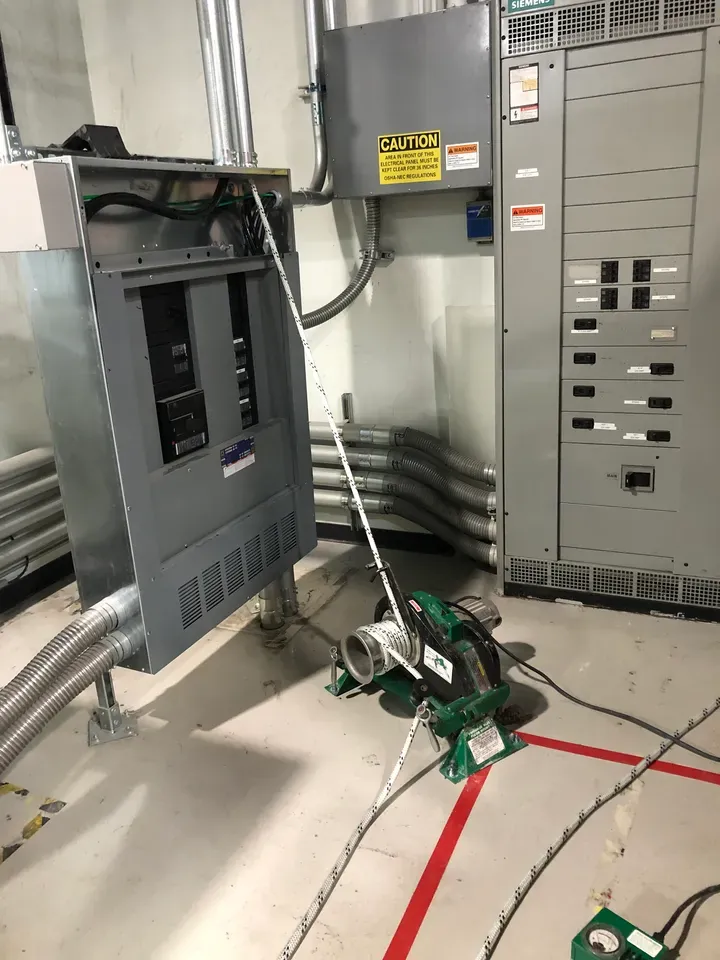
A breaker that trips is doing exactly what it was built to do: it is cutting power before wiring, a device, or an appliance can overheat. Replacing the breaker without finding out why it opened is the single most common mistake we get called out to correct.
Here is the process we use on troubleshooting calls across Salt Lake County, Davis County and Park City, along with the checks you can safely do yourself before picking up the phone.
The four reasons a breaker trips
Almost every trip falls into one of four buckets. Knowing which one you are dealing with narrows the search dramatically.
- Overload: the circuit is carrying more current than it is rated for. Usually gradual, often heat related, and typically tied to adding a space heater, window AC, or a shop tool to an existing circuit.
- Short circuit: a hot conductor contacts a neutral or another hot. This trips instantly and hard, often with a bang, a scorch mark, or a burnt smell.
- Ground fault: current is leaking to ground, commonly through moisture. GFCI devices in bathrooms, kitchens, garages, exterior outlets and hot tub circuits are built to catch this.
- Arc fault: an AFCI breaker sees the signature of a loose connection or damaged conductor arcing. These are the trips that frustrate homeowners most because nothing looks wrong.
Safe checks you can do first
Never hold a breaker in the on position, never replace a breaker with a higher amperage rating, and never open the panel cover yourself. The conductors ahead of the main are still live even with the main off.
- Note what was running when it tripped, and whether it happens at the same time of day.
- Unplug everything on the circuit, reset the breaker, then add loads back one at a time. A failing appliance shows itself fast.
- Look for a tripped GFCI receptacle upstream, often in a garage or bathroom, before assuming the breaker is at fault.
- Feel the panel cover for heat and listen for buzzing. If you find either, stop and call a licensed electrician.
When it is not the breaker at all
The trips we chase most often are not caused by the breaker or by too many devices. They come from a shared neutral split between two circuits, a backstabbed receptacle that has lost tension, a nicked conductor buried behind drywall from an old remodel, or an AFCI reacting to a motor load it does not like.
We use clamp meters, insulation resistance testing, and thermal imaging to find the fault instead of guessing. On older Salt Lake Valley homes with aluminum branch wiring or a legacy panel, the trip is often the first warning that the equipment itself is at the end of its life.
Signs the panel itself needs replacing
- Breakers that will not reset, feel loose in the bus, or trip with no load connected.
- Rust, scorching, or a burnt plastic smell at the enclosure.
- Federal Pacific Stab-Lok, Zinsco, or Challenger equipment, which has a documented history of failing to trip.
- A 60A or 100A service that is already full when you want to add EV charging, AC, or a hot tub.
Frequently asked questions
- Is it safe to keep resetting a tripping breaker?
- Resetting once is fine. If it trips again immediately, or trips repeatedly over a few days, stop resetting it and have the circuit diagnosed. Repeated trips heat the breaker and the bus connection.
- How much does electrical troubleshooting cost?
- We quote diagnostics up front before any work starts, so you know the number before we open a panel. Most residential fault-finding calls are resolved in one visit.
- Why does my AFCI breaker trip when nothing is plugged in?
- AFCI breakers can respond to a loose neutral or a damaged conductor in the wall, and occasionally to certain motor loads. It is a real signal worth tracing, not a nuisance to be swapped out.